
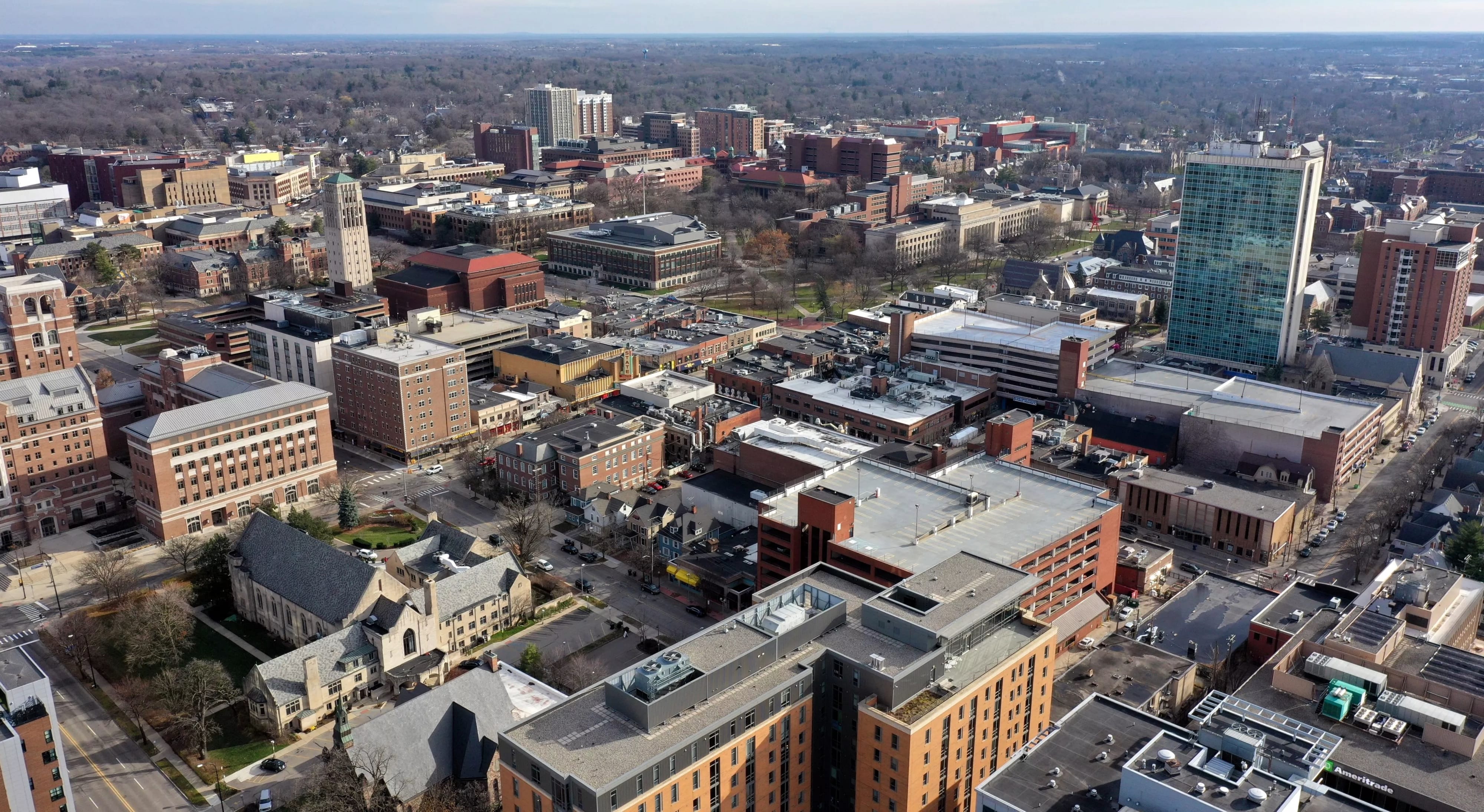
Market Insights - Condos and Town Homes
The outlook for condominium and townhome commercial development in Ann Arbor
Ann Arbor stands at a meaningful and generational renaissance for commercial real estate development. The City Council’s unanimous 11-0 adoption of the Comprehensive Land Use Plan on March 16, 2026, represents an historic paradigm shift, signaling a city openly receptive to strategic growth. And while the University of Michigan has had to adjust to a federal administration less interested in funding critical research, Ann Arbor remains resilient and the outlook, both short- and long-term, are very positive.
Front and center in the new Ann Arbor zoning plan is encouragement and allowance for greater density dwellings. The city redesignated areas into one of three categories:
- Hub
- Transition
- Residential
The Transition and Hub zones represent where the greatest opportunity for commercial developers and builders exists. To ease execution, the city has removed traditional parking minimums, adjusted Floor Area Ratio (FAR) allocations, and revised height limits. By enabling greater density accommodations, the code alters the underlying financial modeling, allowing more units to absorb identical land acquisition costs.
The challenge, of course, remains in execution. Persistent labor constraints, material costs and interest rates will keep developers up at night. But taking advantage of the greater density allowance while satisfying the market needs, should allow for smooth going.
Case Studies in Market Demand
One great example of this is a new development of one-story condominiums being developed on Packard Road. The Enclave of Ann Arbor provides a solution for a segment of the market often ignored. There is a real population of empty nesters and retirees in Ann Arbor who want to right-size their living situation but maybe don’t want to move to a downtown high-rise. The new zoning allows for more creative and product-specific buildouts and innovation. The development offers both lease and purchase options to appease both renters and buyers.
Another solid growth opportunity for developers, investors and managers lies within the micro hubs. As the density of the city grows and expands beyond the immediate downtown, new areas will become hubs for local communities. An example of this is what happened in and around Kerrytown. Multiple condominiums were developed and sold out as soon as they were announced. The demand was so great that the loft on the corners of Detroit, 4th Avenue and Catherine Street was converted from office to residential use. Braun Court just broke ground, clearing space for 32 high-end condominiums.
The Institutional Anchor
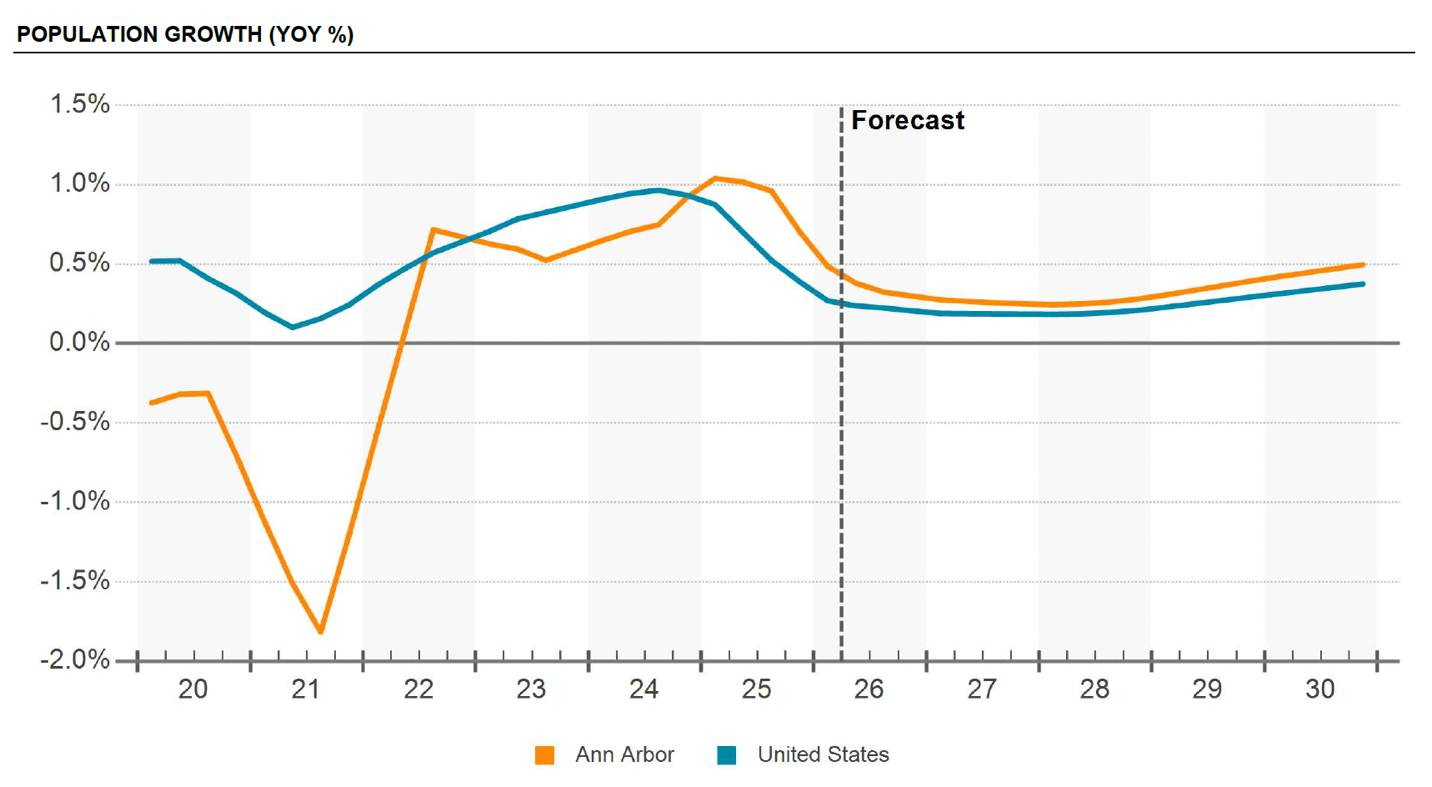
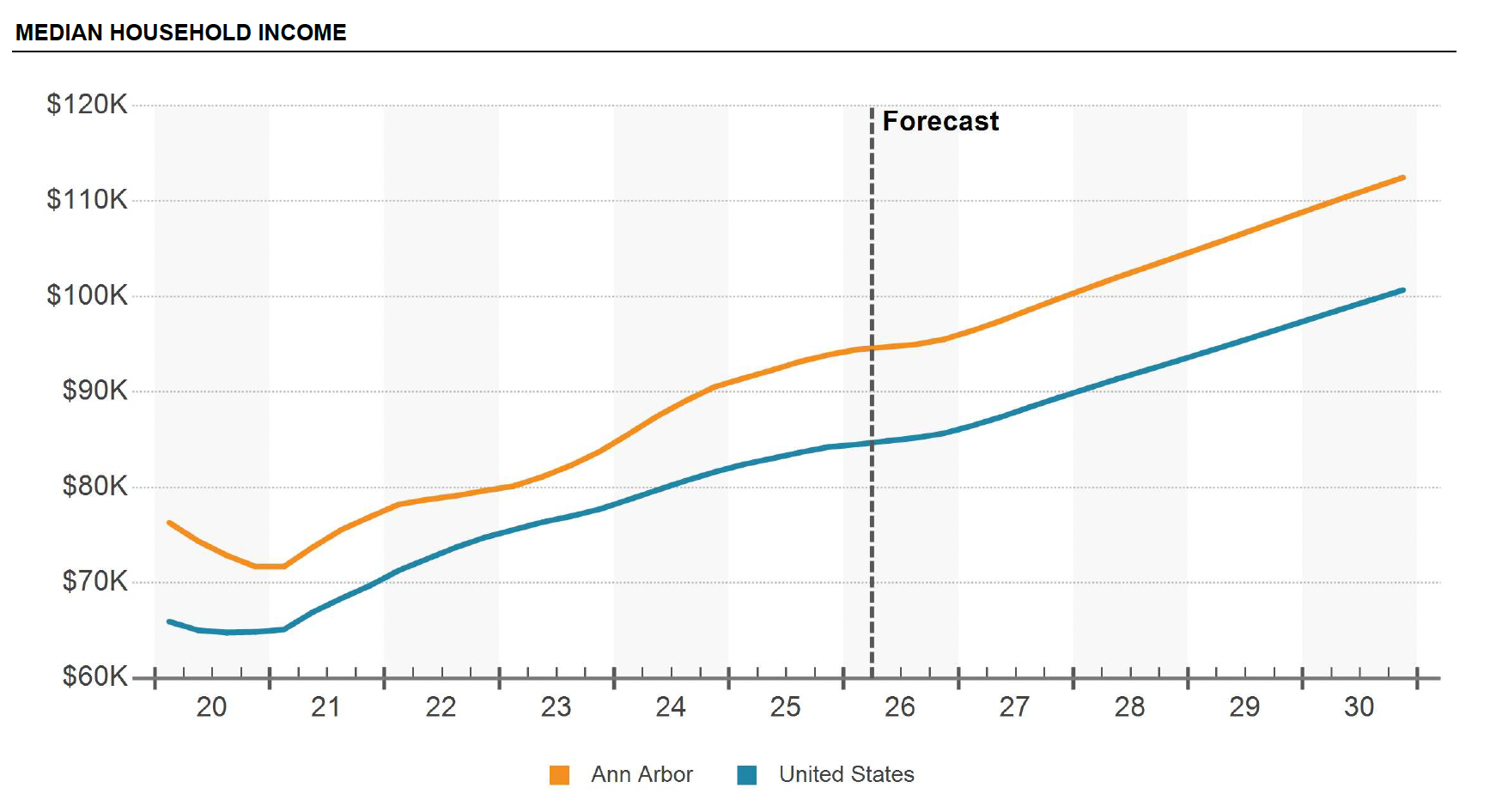
Not to be ignored in any calculation of whether to develop and invest or not is the University of Michigan. The university continues to be an economic and cultural anchor for the city. It provides downturn protection through its globally recognized university and renowned healthcare system. It acts as an incubator, spinning off many companies, attracting both high-net worth individuals and creating high-paying jobs. The median household income in the Ann Arbor metro is $94,723, significantly exceeding the broader US average of $84,862. The City Plan calls for a continuation of population growth, and the university will provide the engine for it, with or without the Federal Government’s assistance.
The case for commercial development and investment couldn’t be stronger. Ann Arbor is the third-largest multifamily market in Michigan, featuring a massive base of 32,700 units, primed with strong fundamentals and a favorable regulatory ecosystem. The next ten years will see monumental change and growth. The smart developers, investors and builders will engage now.